India Life Insurance Market Evolution: Redefining Wealth and Mortality Protection.
Executive Snapshot
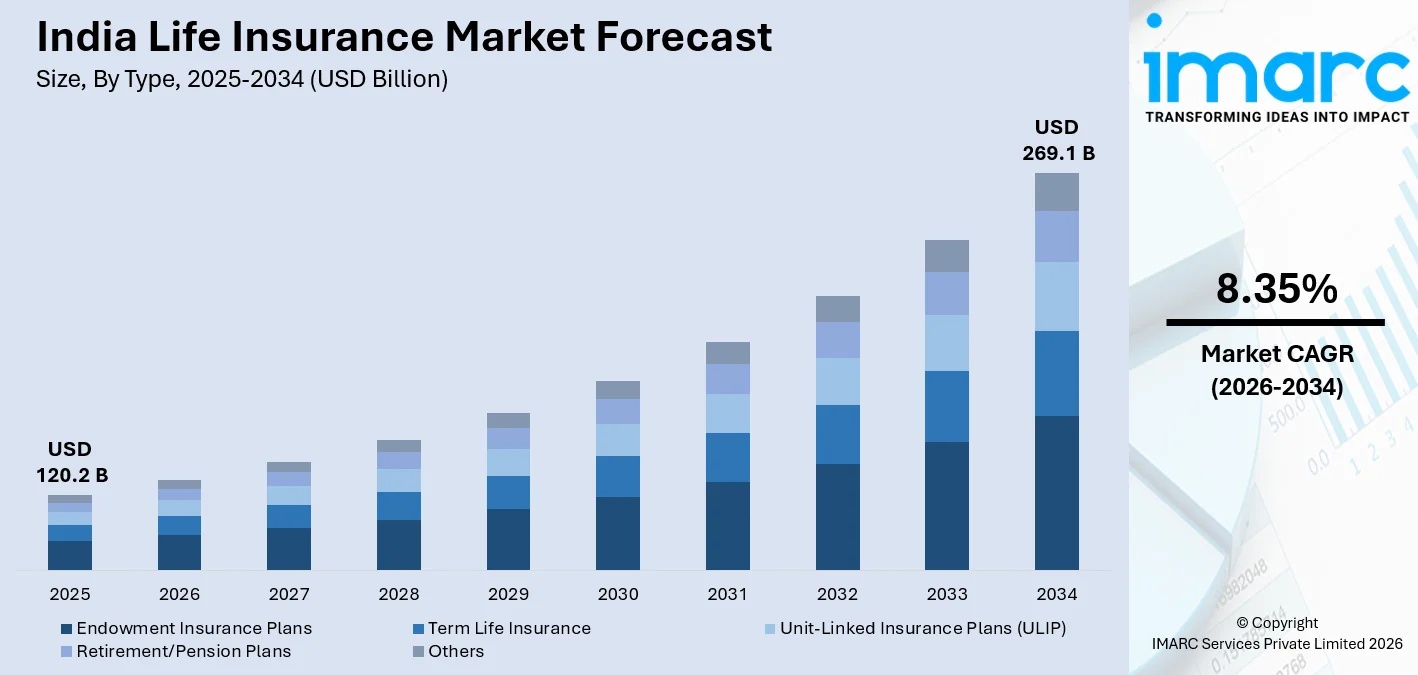
The pursuit of financial security is undergoing a monumental transformation across the subcontinent. Moving away from traditional, purely savings-centric behaviors, families are increasingly recognizing the vital importance of robust mortality protection. While the penetration rate stood at a modest 2.7% in FY 2025, the overarching ecosystem is expanding rapidly. Valued at USD 120.2 Billion in 2025, the sector is projected to reach an impressive USD 269.1 Billion by 2034, driven by a compound annual upward trajectory of 8.35%. This evolution paints a promising picture for stakeholders looking to understand the core drivers behind the life insurance market share in india and how consumer preferences are fundamentally shifting.
The Catalyst of Change: What's Driving Demand?
Several dynamic elements are reshaping the landscape. The rise of the middle class, which now encompasses over 300 million individuals, has dramatically increased disposable household income levels. Consequently, more families are channeling funds into formal financial protection. Furthermore, the global pandemic served as a massive wake-up call, shifting the collective mindset from viewing insurance merely as a tax-saving instrument to recognizing it as an essential shield against life's unpredictable uncertainties.
Government initiatives are also playing a crucial role. The ambitious "Insurance for All by 2047" mandate is actively pushing both public and private entities to innovate and expand their reach into tier-2 and tier-3 cities, ensuring financial inclusion at a grassroots level.
Deep Dive: Segmenting the Preferences
To truly grasp the dynamics of this sector, one must dissect the life insurance market share in india across various operational and demographic segments.
-
Product Types: Risk aversion remains a profound cultural hallmark. Therefore, Endowment Insurance Plans continue to dominate, holding a solid 36.7% portion of the ecosystem in 2025. These plans offer the dual comfort of mortality cover and guaranteed savings returns, making them incredibly attractive to households prioritizing safe wealth creation alongside security.
-
Premium Payment Structures: When evaluating how consumers prefer to pay, Regular premium models lead significantly, capturing 68.4%. This aligns perfectly with the standard monthly income patterns of salaried individuals, allowing them to spread out their financial commitments over 10 to 25 years without experiencing liquidity crunches. Mid-range premium policies (accounting for 44.2%) strike the perfect balance between affordability and substantial coverage.
Request Industry-Focused Sample with Insights & Forecasts
Digitalization and New Regulatory Horizons
The modernization of distribution networks is bridging the gap between urban millennials and legacy insurers within the India Life Insurance Market. The implementation of e-KYC, video-based verification, and seamless mobile applications has drastically reduced customer acquisition costs while enhancing the end-user experience.
Despite this rapid digitization, offline channels still command 71.3% of purchases. The profound reliance on established insurance agents highlights the ongoing need for a human touch, personalized advice, and deep trust in the intricate decision-making process.
Geographically, South India emerges as the dominant region, securing 33.8% of the landscape. The states of Tamil Nadu, Karnataka, and Kerala boast superior financial literacy rates and deeply entrenched bancassurance networks, facilitating higher adoption rates. Meanwhile, private sector entities are accelerating at roughly 12% annually, fueled by agile product innovations like Unit-Linked Insurance Plans (ULIPs) and flexible retirement solutions, effectively challenging legacy public sector dominance.
The Forward Trajectory and Strategic Execution
The structural transition from a largely uninsured population to a financially secure demographic offers a rare and lucrative opportunity. A comprehensive analysis recently published by the IMARC Group underscores that the sheer volume of India's population—over 1.4 billion—combined with rising urbanization, lays a fertile ground for sustainable, long-term expansion. While challenges such as high policy lapse rates and mis-selling in rural areas persist, the concerted efforts by regulatory bodies to enforce operational transparency and launch widespread financial literacy campaigns are mitigating these risks effectively.
As the sector matures, insurers who successfully balance digital convenience with trustworthy offline advisory will capture the highest lifetime value. By aligning product development with actual consumer needs, companies can secure lasting loyalty in an increasingly competitive arena.
Market Segmentation
Type Insights
- Endowment Insurance Plans (36.7%)
- Term Life Insurance
- Unit-Linked Insurance Plans (ULIP)
- Retirement/Pension Plans
- Others
Premium Type Insights
- Regular (68.4%)
- Single
Premium Range Insights
- Medium (44.2%)
- Low
- High
Provider Insights
- Insurance Companies (62.5%)
- Insurance Agents/Brokers
- Others
Mode of Purchase Insights
- Offline (71.3%)
- Online
Regional Insights
- South India (33.8%)
- North India
- West India
- East India
Frequently Asked Questions (FAQs)
Q1: What is driving the current demand for life policies in the country?
The demand is primarily fueled by rising disposable incomes among the expanding middle class, increased financial literacy post-pandemic, and proactive government mandates aiming for universal coverage by 2047.
Q2: Which product type holds the highest life insurance market share in india?
Endowment Insurance Plans currently lead the sector, capturing 36.7% of the total share. Their massive popularity stems from offering a highly sought-after combination of mortality protection and guaranteed long-term savings.
Q3: How are consumers preferring to pay their policy premiums?
The vast majority of consumers favor Regular premium payments, which account for 68.4% of the ecosystem. This structure perfectly aligns with the monthly salary cycles of most Indian households, ensuring manageable financial commitments.
Q4: Despite technological advancements, why do offline channels remain dominant?
Offline channels still represent 71.3% of purchases because life insurance is a complex, high-trust product. Consumers heavily rely on the personalized advice and human touch provided by traditional agents to navigate intricate policy terms.
Q5: Which region is leading the adoption of financial protection policies?
South India leads the landscape with a 33.8% share, driven by exceptionally high financial literacy rates and the strong presence of robust bancassurance networks across states like Kerala, Tamil Nadu, and Karnataka.